
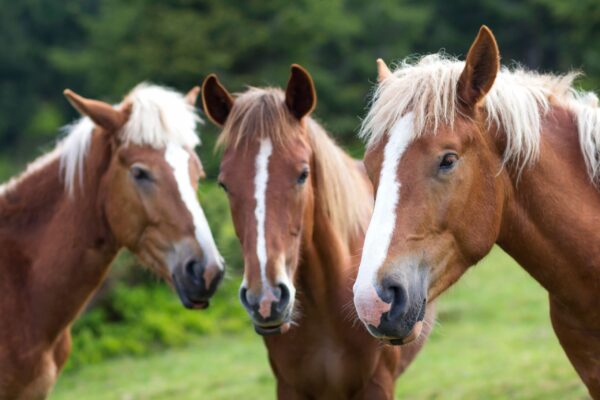
One day, farmers and visitors to the ranch witnessed an unusual event: a large horse began to make loud, prolonged noises that sounded like human flatulence. This caused laughter and surprise, but as the situation developed, people around began to wonder: what was really happening to the animal and why could such a phenomenon occur in a horse? This incident became a topic of discussion among those around and on the internet, where users shared funny reactions and serious questions about the physiology of large ungulates.
What happened that day
Initially, the farmers noticed unusual sounds coming from the stall of a large horse kept on the farm. According to eyewitnesses, it was more than just the usual chewing of hay or sighing after a long day. The sounds resembled those associated with flatulence – brief, but loud enough to be heard outside the stall.
At first, the workers thought it was a joke, but when the sounds repeated several times, they realised that it was not a random noise. People nearby began to laugh and discuss what was happening, as such sounds are rarely associated with horses. Over time, this event made them wonder why the animal might be reacting this way to its condition.
Horse physiology and gas formation

The structure of a horse’s digestive system differs significantly from that of humans. Horses are herbivores with a very long digestive tract and an extensive large intestine, where roughage is fermented. Fermentation helps horses extract nutrients from hay, grass and other roughage, but the process produces gas. Most of these gases are expelled through the anus, which is considered a normal part of physiology. Only for some people do the sounds and smells that accompany this process become a source of laughter, whereas for the animal it is a normal occurrence.
A constant build-up of gas can be a sign of digestive imbalance, and farmers pay attention to this in order to rule out possible health problems. In most cases, moderate gas formation is part of normal digestion in horses.
Causes of increased gas formation in horses
Not every instance of unusual sounds in a horse is cause for alarm. Many situations are related to normal physiological processes. Increased gas formation can be caused by several factors. The most common factors include:
- a sudden switch to a new type of feed;
- consumption of large amounts of legumes or succulent feed;
- insufficient roughage in the diet;
- stress or changes in the environment;
- physical activity after a heavy meal;
- digestive disorders or microbial imbalances.
In normal practice, farmers pay attention to the animal’s diet and behaviour in order to identify possible disorders in a timely manner. If the change in sounds is accompanied by lethargy, refusal to eat or other alarming symptoms, experts recommend consulting a veterinarian.
Why this story sparked interest
The incident involving loud, gas-like noises from a large horse became popular on social media and among farmers not just because of its humorous aspect. It got people talking about animal physiology and how the outside world perceives behaviour that is considered normal in the animal world.
Many commentators noted that such cases show how little we know about what goes on ‘behind the scenes’ with the animals we live alongside. This attracted the interest of both nature lovers and those who are professionally involved in animal husbandry.
The humour that this story evokes should not turn into contempt for living creatures. Horses are social and sensitive animals, and even if their behaviour seems amusing, it reflects the peculiarities of their physical condition and physiology.
In the world of agriculture, moments like these sometimes help people to get closer to animals and see them as living creatures with their own habits. Laughter becomes a way to perceive the world around us more easily, as long as it does not conflict with respect for animal life.